

What is a good distance to walk every day?
Did you know that walking is the easiest way to get exercise into your daily routine? Whether you’re a busy person or someone who has trouble fitting in a workout, adding a daily walk to your routine can benefit both your body and mind.
What’s a good distance to walk every day? According to Harvard Health Publications, it’s about 10,000 steps per day — roughly four miles. And although this number may seem daunting at first, you’ll be consistently reaching those 10,000 steps in no time with the right tweaks!
Here are some tips on reaching your step goal every day: Set yourself up for success by being prepared. What do you need for a successful walk? Just yourself and comfortable footwear, as well as weather-appropriate clothing. What you wear is important because the more skin you cover (with weather-appropriate clothing, of course), the less time your body will spend adjusting to the temperature. If it’s chilly outside, bundle up before you take your walk!
Additionally, having a good playlist ready for your walk can mark the difference between reaching 10k steps or falling short. What songs should you mark in your playlist? Songs with faster beats are better for pacing yourself so that you reach your step goal. 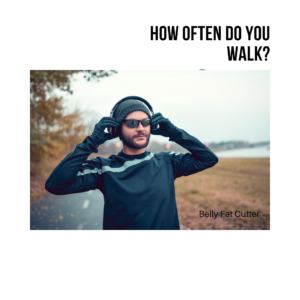
According to WalkJogRun, research has shown that listening to fast-paced music while exercising may improve performance by helping exercisers sustain their target heart rate and thereby maximize cardio fitness.
What types of shoes are best?
Choose a comfortable pair of tennis shoes.
I prefer tennis shoes. They are comfortable and you can do indoor and outdoor activities with them. Sneakers are also good for fitness, but not as much as tennis shoes, especially if they have a lot of support. You can’t use sneakers outside very well because they get wet and dirty easily. So the best answer is: Choose a comfortable pair of tennis shoes.
What should you avoid?
High heels and other restrictive shoes may not be the best choice because they can harm your feet as you walk.
Your feet, like the rest of you, are designed to work together for walking. Walking requires a full range of motion in your ankle and foot joints. If you don’t allow that joint movement when you walk, the result can be discomfort or pain in your ankles or feet. And that can lead to problems with walking and continued compounding health problems.
Your shoes may be the cause of your problem, so changing to more comfortable footwear might be all you need to do. But if you continue to have discomfort or pain, it’s time to check with your doctor to see if there are other things that need attention. For example, arthritis or another condition can affect different parts of your foot and make walking difficult.
If you find it hard to walk in restrictive shoes, there may be a problem that needs attention from your doctor. Your podiatrist can tell you whether or not that’s the case and what you need to do about it. In the meantime, don’t wear those stilettos just yet.
http://www.everydayhealth.com/columns/ask-the-doctor/what-should-you-avoid.aspx
What else should you consider?
Try to mix up the terrain that you walk on since this will help strengthen different muscle groups in your body. Switching from concrete to gravel or grass for at least part of your daily walk is a great way to change things up!
If you are just beginning to walk for fitness, there are lots of beginner walking tips that you can find online. Walking in water is a great way to increase your workout intensity and make it more like resistance training. Adding in some cross-training with biking or swimming (where appropriate) might be beneficial in making sure that you’re giving all your muscle groups a good workout.
If you have a medical condition, be sure to check in with your doctor before starting a walking program. If you have any concerns about your health, ask your doctor if walking is the best exercise option for you. Also, be sure to let your doctor know about any symptoms that arise when walking or exercising.
Your doctor can help make sure that you are safe when it comes to working out and walking by looking over any previous conditions and advising you on how far and fast to walk safely. They may even give specific exercises that they want you to do in order to get the most benefit from the time that you spend walking!
Citations:
1.”10 Beginner Walking Tips | Walking for Health and Fitness.” Fitness Magazine | Workouts, Diet Plans, Nutrition Tips. N.p., n.d. Web.
2.”5 Walking Workouts To Burn Fat Fast | Breaking Muscle.” Breaking Muscle RSS. N.p., n.d. Web. 16 June 2016.
3.”How to Start Walking for Exercise (with Pictures) – wikiHow.” How to Start Walking for Exercise (with Pictures) – wikiHow. N.p., n.d . Web.
4.”The Benefits of Walking Exercises – Verywell Fit.” The Benefits of Walking Exercises | Verywell Fit www .verywellfit .com/the-benefits-of-walking-ex
What’s the easiest way to track my steps?
There are tons of apps out there that allow users to keep track of their progress towards reaching 10k steps per day, including Map My Walk.
What should I do if I’m having a hard time finding time for a walk?
The biggest tip we have for making time for a walk is to leave your house and put on those walking shoes.
If you’re feeling stressed at the end of the day, go for a quick walk.
Start your baby/toddler on an active lifestyle early to set them up for success later in life.
Walk during your child’s nap time so it doesn’t take away from their sleep.
The best thing to do if you don’t have time for a walk is to not think about it as exercise but just think of it as moving around at that given moment.
What’s so great about walking?
For one, it can improve mood by releasing endorphins in the brain — feel-good chemicals that give you a sense of happiness and well-being.
Walking is good for you in many ways. First of all, it’s part of an active lifestyle that combats obesity, heart disease, and high blood pressure – to name but a few things.
Second, walking provides the opportunity to see something different when traveling than if you were using roads or other vehicles. It also gives you time to take in your surroundings instead of rushing past them in a vehicle. Walking thus reduces stress levels because it allows people to relax naturally in their surroundings.
Further, walking enhances community life by encouraging people to connect with friends and neighbors while out taking walks together within their communities. This sense of community can also help reduce stress levels because it makes people feel more connected and accepted by others within their communities. Finally, walking in nature can give people a chance to learn and appreciate the natural world and all it has to offer.
So walking’s benefits are many, including mood enhancement, fighting obesity, preventing heart disease and hypertension – not to mention strengthening community ties.
What else can walking do?
Studies have shown that regular walks might also decrease blood pressure, reduce the risk of cardiovascular conditions, and help with weight loss.
What should I do after my walk?
When you come home from your daily walk, be sure to stretch thoroughly! Then reward yourself for a job well done by settling down with a good book or movie.
What should I keep in mind?
Try not to keep putting off exercise because you don’t have enough time to fit it in — with such easy, accessible exercises like walking, there’s no reason why anyone shouldn’t be getting their daily dose of fitness!
If you think you can’t go on a walk because you live in an unsafe area, don’t let that stop you: safety is important and we understand what it feels like to wonder if your neighborhood is safe. However, if this is the case for you, consider trying out walks around your office building or apartment complex instead.
What are some other ways to get exercise into my day?

Getting exercise into your day can be difficult, especially if you have a busy schedule. Luckily, there are ways to fit it in no matter what time of day you are. Here are nine tips.
First, choose an activity you love. Try to find exercises that will fit your lifestyle. For example, if you like to run, try jogging. You could also sign up for an exercise class. This will help you stick to your routine and learn new activities.
Second, you may want to consider doing exercise with your family. Doing chores, such as shoveling or yard work, is a great way to incorporate physical activity into your daily life. Taking your kids to the park or the zoo is also a good idea.
Third, you may want to plan for short exercise sessions throughout the day. If you work long hours, you may not feel like doing a workout once you get home. But you can still take a few minutes to walk around the block. And you can do a quick 10-minute workout before you shower.
Fourth, you can get up early and do some exercise. Doing a few gentle stretches and adding some push ups to your routine is a great way to start your day.
Fifth, you may want to use your lunch break for some exercise. You can go for a brisk walk or ride your bike to your destination.
Sixth, you can try “exergames.” These are games that simulate sports such as tennis or bowling. They can be a lot of fun, and they can burn up to as many calories as a walk on a treadmill.
For those who want extra credit or need more convincing that they can add 10k steps into their everyday life, here are some recommended exercises: hiking, jogging, and playing sports.
You may be interested in, How to lose belly fat in 2 weeks
Conclusion:
So, what are you waiting for? Grab your sneakers and head outside today! Your body will thank you for it. Remember that walking is the easiest way to get exercise into your daily routine — whether you’re a busy person or someone who has trouble fitting in a workout. Whether it’s 10,000 steps per day (roughly four miles) or 5 minutes every hour, adding these small increments of movement throughout the course of your day can make all the difference in feeling great both physically and mentally.